Murasame
Murasame
Murasame — A Traditional Confectioner
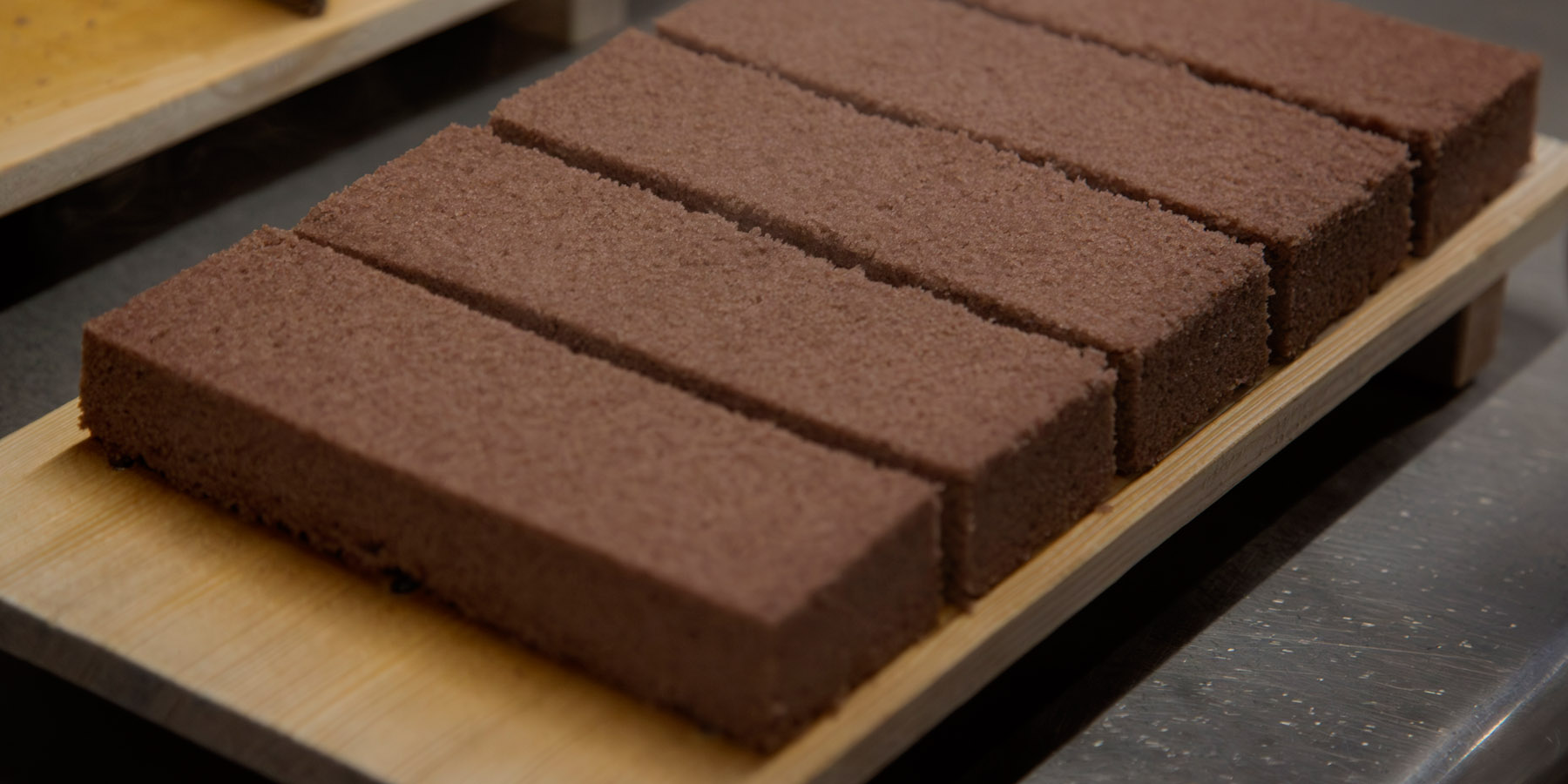
Murasame is the signature confection of Shiogo Co., Ltd., carefully preserved and crafted for over 170 years in Kaizuka, Osaka.
Murasame is a traditional Japanese sweet made by blending finely sieved azuki bean paste with rice flour and sugar, mixing them into delicate granules by hand, and placing the granules into wooden molds to form bars that are then gently steamed. As a regional specialty of the Senshu area of southern Osaka, Murasame has been enjoyed since the mid-Edo period, some time during the 18th century. Its name, "Murasame", refers to a brief passing shower—rain that falls softly and then fades away—reflecting its moist yet delicate texture. Murasame is cherished as one of Senshu’s representative traditional confections.
Though modest in appearance—a simple brown bar with red undertones—Murasame offers a refined experience: a gentle, flaky texture that falls softly on the palate; the satisfying body of rice flour; the fragrant aroma of carefully selected red beans and rice; and a delicate, understated sweetness. Made from only three ingredients—red beans, rice flour, and sugar—and free from preservatives or additives, Murasame is freshly steamed each morning to ensure its pure, just-made flavor.
Like a passing shower that falls softly and disappears, Murasame features a fleeting yet beautiful taste and leaves a lingering afterglow. We invite you to savor the quiet elegance of this traditional Japanese confection.
Our Murasame Features
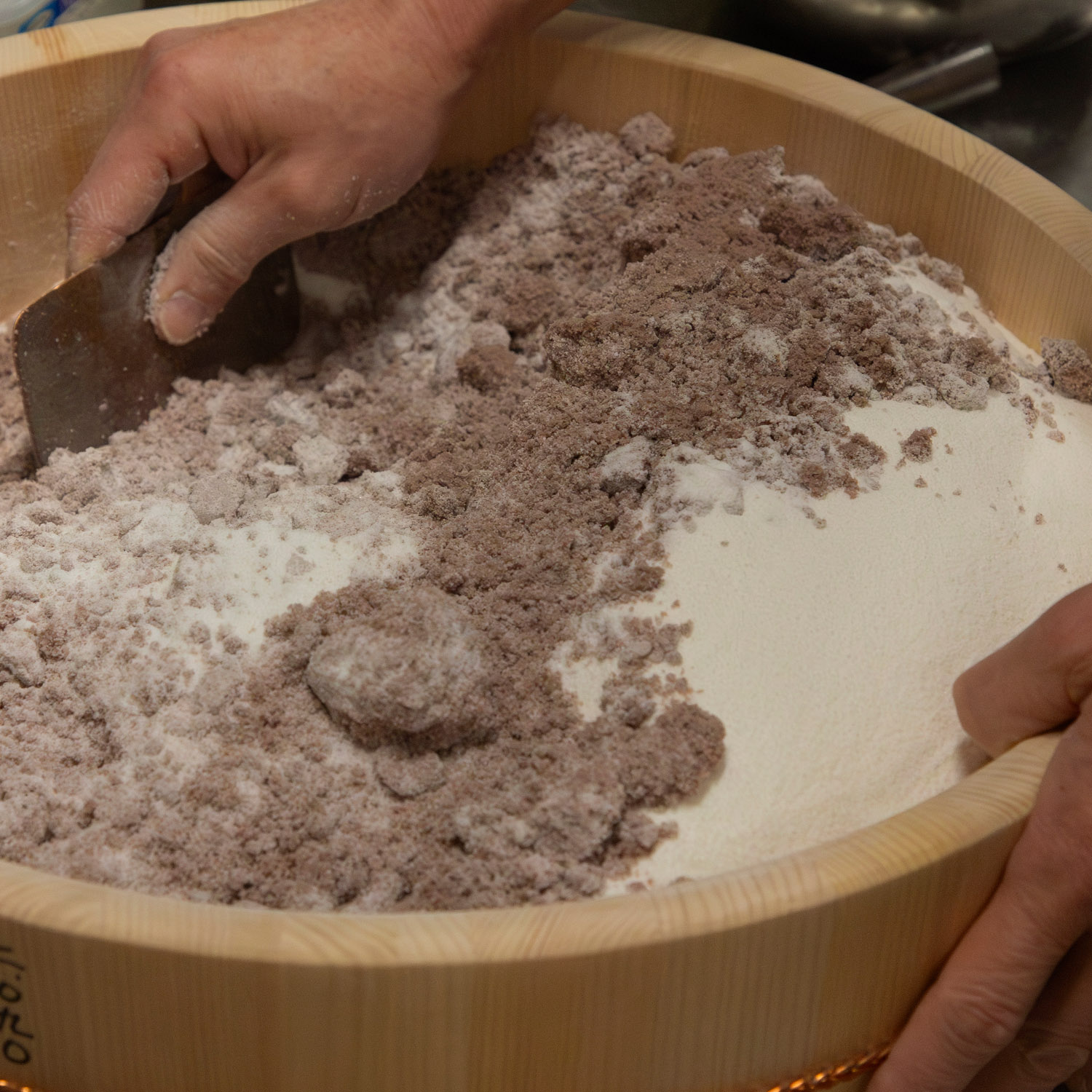
Shiogo’s Murasame is a remarkably simple traditional confection made from only three ingredients: red beans, rice flour, and sugar. The quality of these ingredients and their precise balance determine its distinctive taste.
Two varieties of carefully selected red beans from different regions are used to create the paste. These are then combined with four types of rice flour, each produced by a different milling method and blended in-house. Finally, sugar is added, bringing all the ingredients together in a closely guarded proportion to achieve the desired texture and flavor.
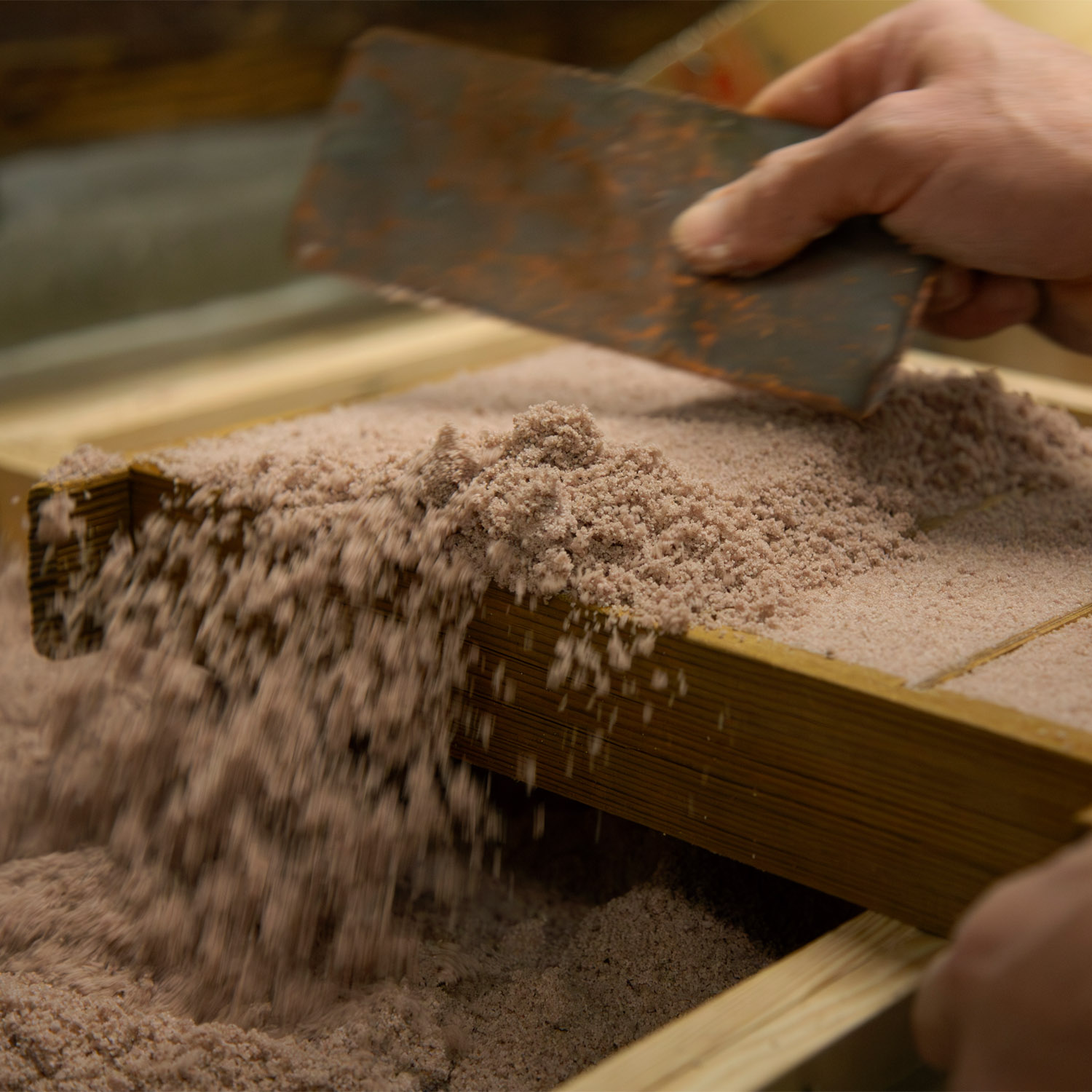
At Shiogo, Murasame's texture is of the utmost importance.
The ingredients are sifted and mixed by hand while carefully monitoring their feel, then placed into wooden molds and shaped with precision. A precise pressure is applied during this step: if pressed too firmly or too lightly, the resulting confection will lack its characteristic texture. It is the skill of experienced hands that gives Murasame its distinctive, gently crumbling mouthfeel.
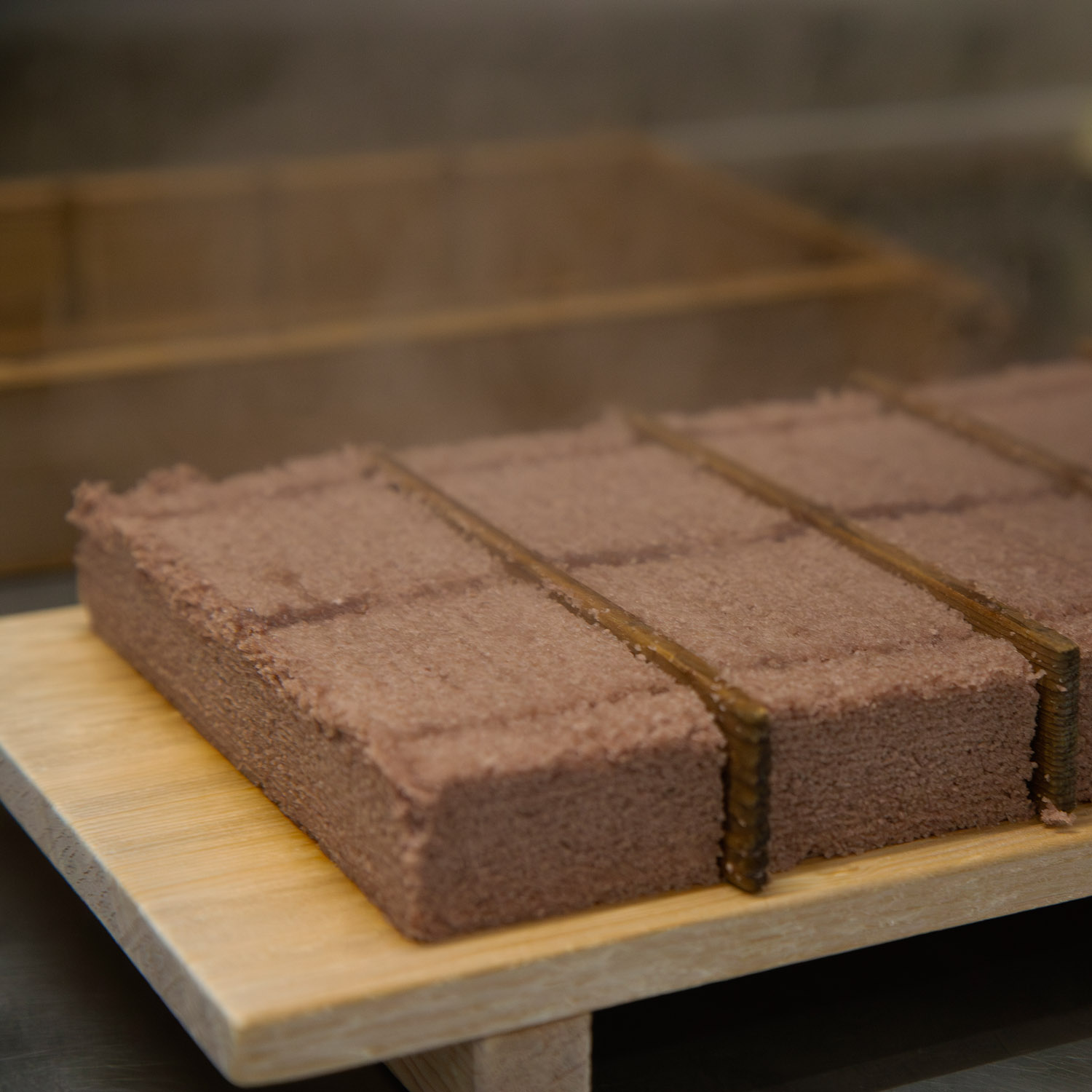
Slowly steamed in a dedicated steamer, Murasame develops a moist yet softly crumbling texture, along with a satisfying body, imparted by the rice flour, that deepens with each bite. As you savor it, the refined aroma of red beans and rice unfolds across the palate, leaving a rich and lingering finish.
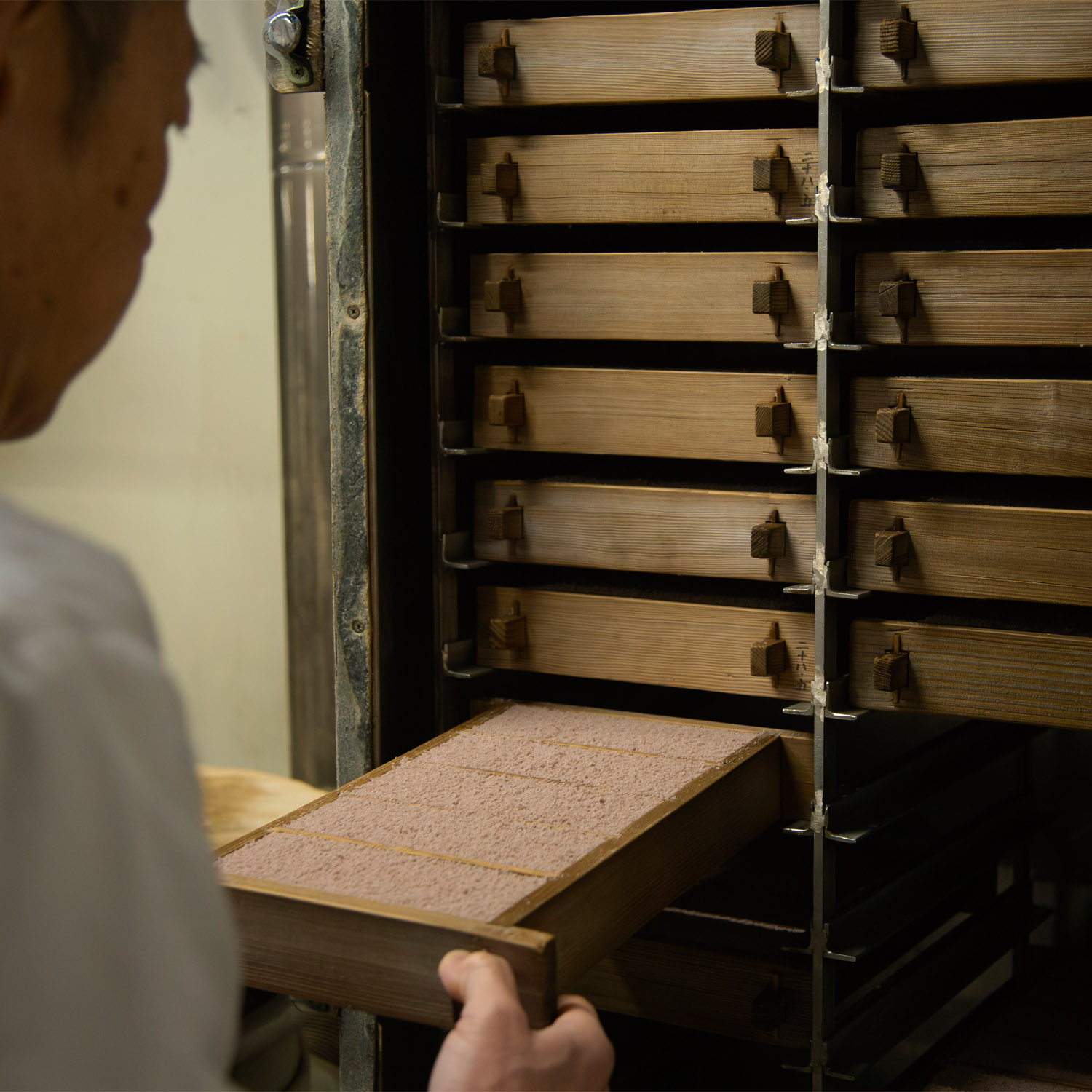
Because no preservatives or additives are used, Murasame has a shelf life of three days. The Murasame offered in our shop is prepared fresh that very morning.
For 170 years since our founding, we have begun preparation early each day to deliver the flavor of Murasame at its freshest. We view this as a continuation of our promise, which we have upheld unchanged since the Edo period.
The Origin of the Name “Murasame”
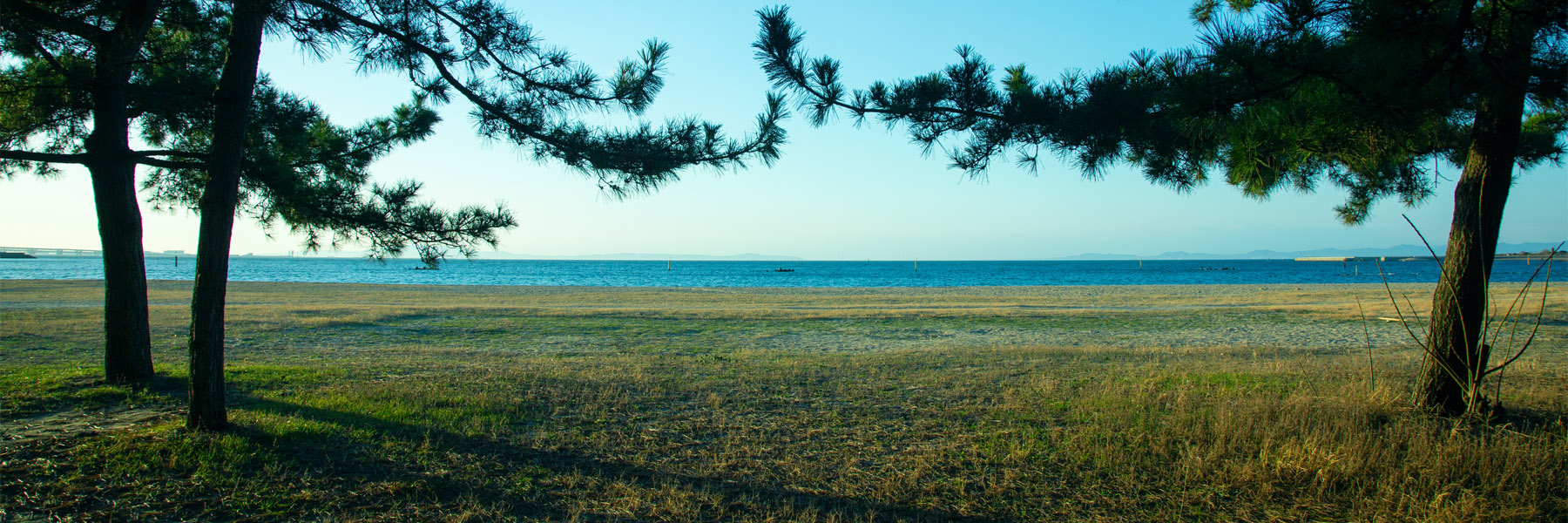
Murasame refers to a passing shower that softly rustles as it dampens the trees, giving rise to moments of dew and mist. Since ancient times, such rain has been celebrated in Japanese poetry and prose for the atmosphere and emotion it leaves behind. The passing showers that fall along the shoreline of Kaizuka are known as Kaiura Murasame and are counted among the Izumi Eight Views.
The Izumi Eight Views represent eight scenic landscapes selected from the former Izumi Province, now southern Osaka. Shiogō’s Murasame takes its name from Kaiura Murasame, a view that praises the scenery of Kaizuka, where the shop was founded. In Japan, traditional sweets have long been given names inspired by nature—names that are cherished for the landscapes and emotions they evoke.
The Izumi Eight Views;
Chinu Enpan – Chinu was an ancient name for Osaka. This view depicts boats with white sails crossing what is now Osaka Bay, once called the Sea of Chinu.
Takashinohama no Tsuki – The moon over Takashinohama, near today’s Hamadera Park, famed for its white sands and pine groves.
Ushitaki no Koyo – The upper reaches of the Ushitaki River in Kishiwada, still celebrated today for its brilliant autumn foliage.
Katsurei no Minegumo – Clouds drifting over the peaks of Mount Izumi Katsuragi, a sacred mountain straddling Osaka and Wakayama.
Kaiura Murasame – Passing showers falling over the Kaizuka shoreline, with Awaji Island visible in the distance.
Kogi Sekisho – The sunset illuminating Kogii town, once a landscape of fields and irrigation ponds.
Hine no Bou – Rain falling at dusk in Hineno, an area of Izumisano that still retains many historic temples and shrines.
Suma Isaribi – The glow of fishing boats on the night sea, seen across Osaka Bay from Senshū toward Suma.
Founded in 1854, Shiogo is a confectioner making "Murasame," the traditional sweet of southern Osaka Prefecture, in Osaka Kaizuka City, near Kansai International Airport (KIX).